
WELCOME PACKAGE 400% BONUS
UP TO €3200 + 200
FREE SPINS
UP TO €3200 + 200
FREE SPINS
Home → Blackjack
Blackjack at Megawin Casino: Variants, Rules and Payouts
Stand-on-17 Rule and Its Meaning for Players
The S17 rule requires the dealer to stand on a soft 17, which reduces the house edge by 0.14 percentage points compared to hitting soft 17 rules that increase it by 0.22 percentage points. This specific configuration is a standard component of the Liberal Vegas Strip game offering an RTP of 99.72% with a house advantage of just 0.28%. Consequently, players benefit from a significantly lower long-term loss rate when employing basic strategy at these tables. The distinction between standing and hitting directly impacts the mathematical expectation over millions of hands.
The Quantum Blackjack Plus Live variant from Playtech operates with an RTP of 99.57% under optimal strategy conditions, utilizing a framework where the dealer stands on soft 17. This specific table allows stakes ranging from 1 EUR to 5,000 EUR, providing high limits for serious players seeking consistent returns. The combination of liberal rules and high multipliers up to 1,000x on three-card 21s creates a unique risk profile. Players must balance standard play with bonus triggers to maximize potential payouts within this structure.
Evolution’s Lightning Blackjack features an RTP of 99.56% and also adheres to soft 17 standing rules, maintaining a competitive house edge of approximately 0.44%. Stakes are capped at 2,500 EUR per hand, which differs from the higher limits found in other live dealer options available on the platform. The inclusion of lightning multipliers adds volatility but does not alter the fundamental dealer standing requirement. Understanding this baseline rule is essential before attempting to leverage any side bet opportunities.
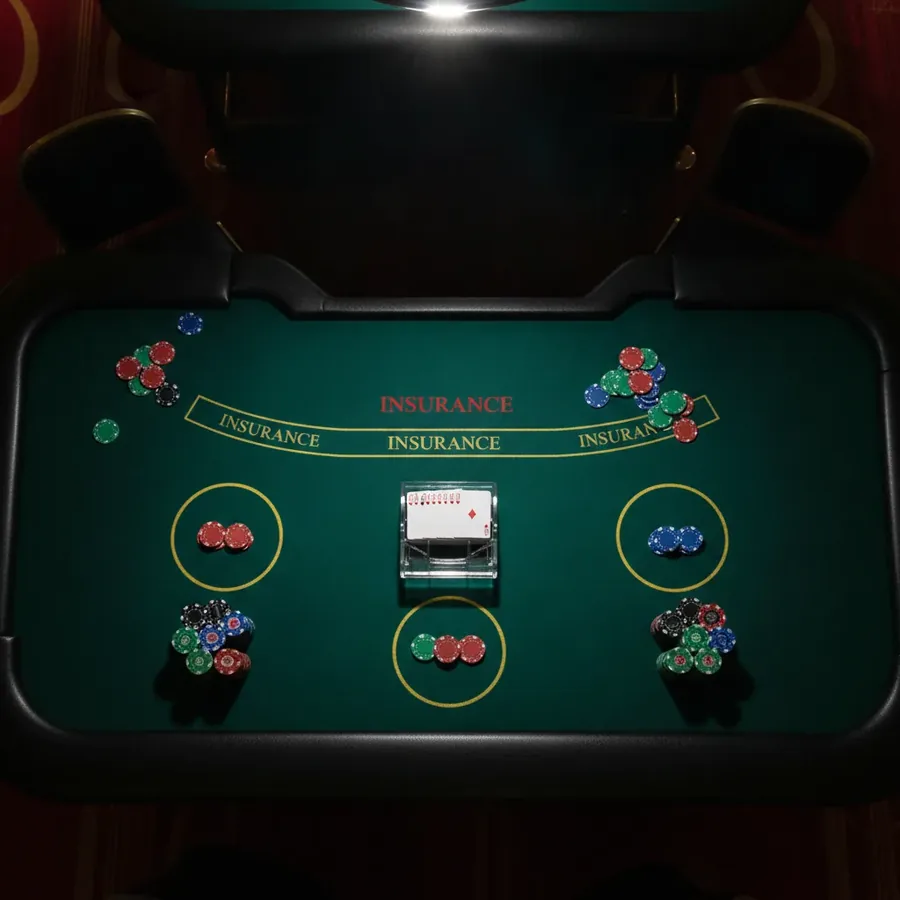
Surrender vs Playing Out on 16 vs 10
Late Surrender allows a player to forfeit half their bet after the dealer checks for blackjack, improving the RTP by approximately 0.08 percentage points. This rule modifier is explicitly included in the Liberal Vegas Strip variant, contributing to its low 0.28% house edge and 99.72% return to player. Without this option, the theoretical advantage shifts slightly in favor of the casino over extended play sessions. The financial impact is marginal but mathematically significant for perfect strategy execution.
Blackjack Party by Evolution lacks explicit surrender rules in its standard configuration, forcing players to hit or stand on hard 16 against a dealer ten. This absence increases the effective house edge compared to games offering late surrender, as players cannot mitigate losses on statistically losing hands. The game maintains an engaging atmosphere with two moderators, but strategic flexibility is reduced. Players relying on surrender to minimize variance will find this environment less forgiving than other variants.
The decision to surrender versus playing out involves comparing the immediate loss of fifty percent against the expected loss of the full wager through subsequent hits. In games without surrender, such as certain single-deck variations, the player must rely strictly on basic strategy charts for hitting or standing. The absence of this rule modifier means the house edge remains static regardless of the initial hand composition. Strategic adjustments are limited to doubling down or splitting pairs instead of cutting losses early.
Soft 17: Dealer Hits or Stands
When the dealer hits on soft 17, known as H17, the house edge increases by 0.22 percentage points compared to standing on soft 17 configurations. This rule change negatively impacts the overall RTP, making the game less favorable for players employing basic strategy over thousands of hands. The Liberal Vegas Strip variant avoids this penalty by ensuring the dealer stands, thereby preserving the lower 0.28% house advantage. This difference is critical for long-term bankroll management and expected value calculations.
Resplitting Aces (RSA) improves the player's position by 0.08 percentage points, partially offsetting some rule disadvantages but not the impact of hitting soft 17. This rule allows players to split aces multiple times if another ace is drawn, creating additional opportunities for strong hands. However, most casinos restrict aces to receiving only one additional card, limiting the effectiveness of this modifier. Combining RSA with soft 17 standing yields the most favorable conditions for professional analysts.
Double After Split (DAS) provides a further improvement of 0.14 percentage points, allowing players to double their bet on any hand resulting from a split. This rule is standard in the Liberal Vegas Strip game, contributing to its superior 99.72% RTP among multi-deck options. Without DAS, players lose a valuable tool for maximizing profits on strong split hands against weak dealer upcards. The cumulative effect of these liberal rules significantly lowers the barrier to positive expected value.
Unlimited seats via a split dealer hand
Lightning Blackjack by Evolution supports unlimited seats at the virtual table, accommodating any number of concurrent players without affecting gameplay mechanics or speed. This feature distinguishes it from traditional physical tables or smaller digital layouts that cap participation based on seat availability. Each player interacts independently with the dealer, who manages all hands simultaneously using a single shoe. This structure ensures fair distribution of cards regardless of the total player count on the lobby interface.
Quantum Blackjack Plus by Playtech also facilitates multiple participants, though specific seat limits are not defined beyond the general capacity of the software platform. The game focuses on individual hand outcomes with quantum multipliers applied to winning combinations rather than table dynamics. Stakes range from 1 EUR to 5,000 EUR, allowing high rollers to join the same session as casual players. The shared dealer hand ensures that all bets resolve against the same final dealer total.
Blackjack Party by Evolution typically hosts fewer visible seats due to its broadcast format featuring two moderators and a party theme. The stream format may limit interactive features compared to the open architecture of Evolution’s Lightning variant. Players seeking a social atmosphere may prefer this version, whereas those prioritizing pure statistical efficiency might choose the unrestricted seating of other titles.
What Percentage Does Blackjack Count Towards Bonus?
Table games including all blackjack variants contribute only 10% toward the wagering requirements of the 300% welcome bonus up to €2,000 plus 100 free spins. This low contribution rate significantly extends the time needed to clear the bonus funds compared to slots, which contribute 100%. For example, wagering €100 on blackjack counts as only €10 toward the turnover target, requiring ten times the volume. Players must calculate this multiplier carefully to avoid exhausting their bankroll before meeting the conditions.
Slots contribute 100% to the bonus turnover, meaning every euro wagered on eligible slot games reduces the remaining requirement by the full amount. In contrast, playing blackjack at the 10% contribution rate makes clearing the bonus substantially more difficult and risky. A player wagering €1,000 on slots fulfills the requirement immediately, while the same amount on blackjack only fulfills 10% of it. This disparity incentivizes players to use bonus funds on high-contribution games to meet terms efficiently.
The 300% match up to €2,000 combined with 100 free spins creates a substantial bonus package, but the 10% table game contribution limits its utility for blackjack enthusiasts. Wagering requirements must be met through high-volatility slots or a massive volume of blackjack hands, both carrying distinct risks. Insurance bets, which pay 2:1 but carry a 7.47% house edge, do not alter the 10% contribution status. Analysts recommend verifying specific game eligibility lists before committing bonus funds to table games.
Blackjack variants at a glance
| Variant | Payout | House edge | Rule | Bet range |
|---|---|---|---|---|
| Blackjack Surrender (Late Surrender) – Regel-Effekt | n.a. (Regel-Modifikator) | −0.08 Prozentpunkte | Spieler gibt Hand nach Dealer-Blackjack-Prüfung auf, verliert die Hälfte des Einsatzes. Verbessert RTP um ca. 0.08 Prozentpunkte. Early Surrender ist wesentlich wertvoller (bis −0.6 Prozentpunkte), aber extrem selten. | Rückzahlung 50% des Einsatzes |
| Blackjack 6 Decks, S17, DAS, DOA, Auszahlung 3:2, Basisstrategie | 99.54% | 0.46% | Dealer steht auf Soft 17; Verdopplung auf jeder Zweierkarte; Verdopplung nach Split erlaubt; keine Aufgabe. Basisstrategie ist für diesen Wert zwingend | Blackjack 3:2, normaler Gewinn 1:1, Insurance 2:1 |
| Blackjack Split / Double / H17 – Regel-Effekte | n.a. (Regel-Modifikatoren) | H17 +0.22 Prozentpunkte; RSA −0.08 Prozentpunkte; DAS −0.14 Prozentpunkte | Dealer Hits Soft 17 verschlechtert RTP um 0.22 Prozentpunkte; Resplit Aces verbessert um 0.08 Prozentpunkte; Double After Split verbessert um ca. 0.14 Prozentpunkte; 6 Decks statt 8 – ca. 0.02 Prozentpunkte. | Double – Einsatz ×2 mit einer Karte; Split – bis 4 Hände; Ass-Split meist mit einer Karte. |
| Blackjack Ein Deck, klassische Regeln, 3:2 | 99.85% | 0.15% | Weniger Decks = niedrigerer Vorteil; ein Deck gibt ca. −0.48 Prozentpunkte gegenüber 8 Decks. Oft durch 6:5 Auszahlung kompensiert. | Blackjack 3:2, Gewinn 1:1 |
| Blackjack Insurance / Versicherung (6–8 Decks) | 92.53% | 7.47% | Separate Nebenwette bis 50% der Hauptwette, wenn der Dealer ein Ass hat. Basisstrategie schreibt IMMER Ablehnung vor (außer Karten zählen bei True Count ≥ +3). Bei einem Deck Vorteil ≈ 5.88% | Insurance 2:1 |
| Blackjack Liberal Vegas Strip (liberale Regeln, 3:2) | 99.72% | 0.28% | Günstigste Regelkombination: S17 + DAS + Resplit + Late Surrender. Standardabweichung 1,15 | Blackjack 3:2, Gewinn 1:1 |
Splitting costs double bet: plan budget
The Blackjack Split rule allows players to divide a pair into two separate hands, each requiring an additional bet equal to the original stake. This mechanic effectively doubles the immediate financial exposure per round compared to playing a single hand without splits. Players must allocate sufficient bankroll to sustain multiple concurrent bets during favorable split opportunities.
A standard split permits up to four hands when splitting non-ace pairs, significantly increasing the total turnover rate. For instance, splitting a pair of tens creates two new hands, each demanding a full minimum wager alongside the initial bet. This structural requirement accelerates fund depletion if the player lacks adequate reserve capital for multi-hand scenarios.
The Blackjack Party table imposes a maximum bet limit of 1,000 EUR, which caps the absolute cost of simultaneous split actions. With two moderators managing the flow, the pace remains controlled but the doubling rule still applies strictly to every valid split. Budget planners should calculate the worst-case scenario where multiple pairs are split against this upper betting boundary.
Live stream with three cameras and OCR
Quantum Blackjack Plus Live utilizes Playtech technology to deliver a high-definition visual feed supported by optical character recognition systems. The interface displays Quantum Multipliers up to 1,000x on specific three-card combinations totaling 21 points directly within the stream overlay. This technical integration ensures transparent tracking of random number generation outcomes for all connected participants.
The Evolution provider's Lightning Blackjack variant streams to unlimited players using distinct camera angles to verify card dealing procedures. Lightning Multipliers reaching up to 25x are applied to winning hands, with the system automatically calculating payouts based on these enhanced factors. Real-time verification prevents disputes regarding the application of multipliers or the validity of final hand values.
Both live variants operate within strict betting ranges, with Quantum starting at 1 EUR and Lightning capping at 2,500 EUR per round. The high-definition streams require stable internet connectivity to render the OCR data and multiplier graphics without latency. Participants rely on these digital interfaces to confirm that the dealer's actions align precisely with the displayed game state.
Mobile version needs 1 Mbit bandwidth
Accessing the mobile interface of live blackjack tables requires a minimum internet connection speed of 1 Megabit per second to maintain stream integrity. Insufficient bandwidth results in buffering delays that disrupt the timing required for placing bets before the dealer locks the round. Users experiencing lag may miss critical decision windows, forcing automatic decisions or forfeiting their turn entirely.
The Quantum Blackjack Plus game supports wagers between 1 and 5,000 EUR, demanding consistent data throughput to transmit large bet values instantly. High-frequency updates for the Quantum Multipliers necessitate low-latency connections to ensure the 99.57% RTP calculation reflects real-time conditions. Mobile devices must process these rapid data exchanges without dropping packets to preserve the fairness of the quantum effects.
Lightning Blackjack limits bets to 2,500 EUR while offering multipliers up to 25x, creating complex payout calculations that require precise synchronization. The Evolution platform optimizes its video encoding to reduce bandwidth consumption while maintaining clarity for the lightning strike animations. Players on unstable networks risk disconnection during multiplier determination, potentially voiding claims to enhanced winnings.
Shoe, Cut Card, and 75 Percent Penetration
The Blackjack Liberal Vegas Strip variant operates with liberal rules including S17 and DAS, achieving a house edge of only 0.28 percent. This efficiency relies on deep penetration strategies where the cut card is placed deeper into the shoe to maximize card counting opportunities. A 75 percent penetration rate ensures that a significant portion of the deck is dealt before reshuffling occurs.
In contrast, the Insurance side bet carries a steep house edge of 7.47 percent, drastically reducing the overall return to player. While the main game offers a 99.72% RTP, engaging in insurance negates much of this advantage unless the true count exceeds +3. Players must recognize that accepting insurance on a 6-8 deck shoe typically erodes profits over extended sessions.
Basic strategy dictates rejecting insurance entirely for standard play, as the 2:1 payout does not compensate for the increased risk. The 1.15 standard deviation indicates moderate volatility, meaning wins and losses fluctuate widely around the expected value. Strategic adherence to base rules minimizes the impact of variance while avoiding the detrimental effects of side bets.
Ace Split: only one card per hand
Splitting Aces is a specialized rule variation where each resulting hand receives exactly one additional card, limiting potential for further action. This restriction significantly reduces the strategic flexibility compared to splitting other pairs, which often allow multiple hits or re-splits. The limitation is designed to cap the player's advantage from drawing perfect cards like tens or face cards.
The Blackjack 6 Decks variant permits doubling after split (DAS), allowing more aggressive play than the restrictive Ace split rules. While regular pairs can be doubled or hit again, aces remain static after the initial deal, altering the expected value calculations. Players must adjust their basic strategy charts to account for these divergent treatment patterns between different pair types.
Resplitting Aces improves the RTP by approximately 0.08 percentage points, though most casinos prohibit this action entirely. When allowed, it enables players to recover from weak draws by splitting again if another ace appears, albeit rarely. Understanding these nuanced rules helps players identify tables that offer slightly better long-term returns despite the one-card constraint.
Six Decks to Eight Decks in the Shoe
The game utilizes six decks instead of eight, a configuration that reduces the house edge by approximately 0.02 percentage points compared to the standard eight-deck shoe. This slight mathematical advantage is negligible for casual play but contributes to the overall RTP calculation for players using perfect strategy. The reduced number of cards slightly alters the probability distribution for card counting and bust scenarios.
Blackjack Split / Double / H17 rules are applied within this multi-deck environment, where specific modifiers adjust the theoretical return on investment. Rules like Resplit Aces improve the RTP by 0.08 percentage points, while Dealer Hits Soft 17 worsens it by 0.22 percentage points. These rule interactions define the baseline volatility and expected loss rate for every hand dealt from the shoe.
Players must account for these cumulative rule effects when calculating the true cost of play under the welcome bonus terms. The combined impact of deck count and soft 17 hitting creates a distinct mathematical profile compared to single-deck variants. Understanding these parameters helps manage bankroll expectations during the wagering requirement period.
RNG draws cards from virtual eight-deck shoe
The Random Number Generator simulates an eight-deck shoe for the digital version of the game, establishing a baseline house edge of 0.46% with liberal rules. This setup allows for Double After Split and standing on Soft 17, which optimizes the Return to Player percentage to 99.54%. The virtual nature ensures immediate shuffling between hands, maintaining statistical independence for each draw.
Quantum Blackjack Plus Live operates on similar principles but introduces Playtech-specific multipliers up to 1,000x on three-card 21 combinations. This variant maintains an RTP of 99.57% when optimal strategy is employed, slightly outperforming the standard RNG counterpart. The live dealer format adds real-time randomness while preserving the underlying mathematical model.
The distinction between the RNG eight-deck simulation and the live dealer versions affects how players approach the 300% bonus funds. While the RNG version offers faster gameplay, the live tables provide visual confirmation of the shuffle and deal process. Both formats adhere to the same core rules regarding splits and double downs.
Bust at 22: Stake Lost Immediately
In standard Blackjack variants reviewed here, reaching exactly 22 points results in an automatic loss of the entire stake, unlike some side bets or specific rule sets. This hard limit applies regardless of whether the player holds a natural 21 or exceeds it through multiple hits. The immediate forfeiture emphasizes the importance of strict adherence to basic strategy charts.
Insurance bets pay 2:1 if the dealer achieves Blackjack, but they carry a separate house edge of 7.47% and an RTP of only 92.53%. Taking insurance increases the total exposure per hand without improving the long-term expectation for the primary bet. Basic strategy dictates always rejecting insurance unless card counting indicates a True Count of +3 or higher.
Under the bonus terms, losing stakes do not contribute positively to the turnover requirement, making preservation of bankroll critical. The 10% contribution rate for table games means that every lost euro counts significantly less toward clearing the €2,000 max bonus. Players should avoid risky maneuvers like buying insurance or splitting low-value pairs unnecessarily.
One Deck vs Eight Decks in House Edge
A single-deck game with classic rules and 3:2 payouts offers a superior house edge of 0.15%, which is 0.48 percentage points lower than the eight-deck version. This significant advantage stems from the increased probability of drawing specific cards needed for optimal plays in a smaller pool. However, such favorable conditions are rare and often offset by restrictive rules elsewhere.
Most online casinos compensate for the single-deck advantage by reducing the Blackjack payout from 3:2 to 6:5, adding exactly 1.39 percentage points to the house edge. This change negates the benefit of fewer decks, resulting in a much higher house edge of 1.85% for the six-deck 6:5 variant. The difference in payout for a $10 bet becomes evident: $15 versus $12.
When comparing the one-deck 3:2 scenario against the six-deck 6:5 option, the latter imposes a substantially higher cost per hour of play. The 1.70 percentage point gap translates to greater expected losses over the duration of the bonus wagering period. Selecting the correct variant is essential for maximizing the utility of the free spins and deposit match.
Blackjack Party runs with two hosts
Evolution's Blackjack Party features a unique atmosphere driven by two live hosts who guide the action and engage with participants. This table supports bets ranging from 1.00 EUR to 1,000 EUR, offering a flexible entry point for various bankroll sizes. The dual-host format aims to enhance entertainment value without altering the underlying mathematical odds of the game.
Unlike Quantum or Lightning variants, Blackjack Party does not include random multipliers or special prize mechanics, relying solely on standard blackjack rules. The absence of side-bet bonuses keeps the focus on traditional strategy and decision-making under pressure. The RTP remains tied to the specific rule set employed, typically aligning with standard Vegas Strip variations.
The social element of having two presenters may influence betting behavior, potentially leading to faster turnover of bonus funds. Since table games contribute only 10% to the wagering requirement, playing high-stakes hands on this table accelerates the clearance of the €2,000 cap. Players should monitor their session length to ensure compliance with the bonus duration limits.
Contact
Live - online chat
Banking









Providers












Megawin Casino 2026